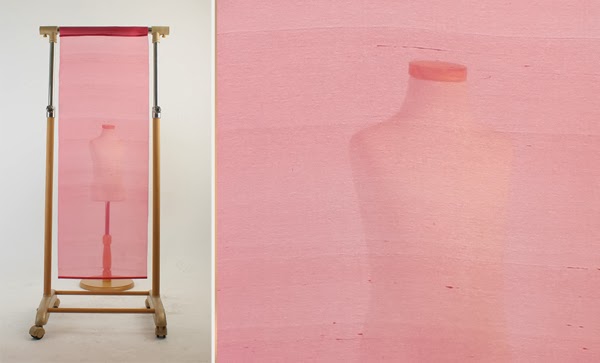
I want to introduce the Silk Dupioni Organza. This silk is different from Silk Dupioni (=douppioni ) or Silk Organza. This is translucent silk which is reeled off raw silk from Dupioni cocoons, one of the Korean traditional fabrics. When I've seen this silk for the first time, I was memorized by it. I couldn't think that it was silk because it looked very different with other silks that I used to know, but I had a memory seen it used for the fabric of 'Hanbok', the Korean traditional clothes.
I know that some countries produce rarely Dopioni Organza. But then Korean Dupioni Organza has characteristic features and beutifulness. May you have already known of Organza silk. It's a stiff and transparent fabric used for interior decorations or cloths. Then, have you heard about Dupioni(=douppioni) silk? Silk Dupioni is made by reeling off raw silk from more than two silkwoms in a cocoon. When two worms spin their cocoons close together, the fibers get tangled up. These naturally tangled fibers are then used together to make thread. The thread contains bumps and irregularities where the fibers from the two cocoons are combined.
The Korean Silk Dupioni Organza has features both of organza and silk dupioni, and traditional fabric used for Hanbok, the Korean traditional clothes. Korean call this fabric 'Oksa' which is made in many areas in Korea. There is differences of a sort of Oksa from a matter of stiff, a matter of transparent or slubs density. The weaving way is also bit different but most of all are produced in traditional way. Some producers still use the traditional way 100% and that silks are considered high-quality goods. Others 'also' use a traditional way but use electricity so it is semiautomatic weaving way. So the fabric can be more vintage and natural. Producible width is so limitative ; only two, but all Hanbok producers make the cloth as these size's fabrics; age-old sizes which are became two of the width of Oksa in entire Korea area.

Let me explain the features of Korean Silk Dupioni Organza. The Korean Silk Dupioni Organza has not only irregular slubs but also irregular stairs from different thickness parts of thread. These features make transparency difference after dyeing.
These naturally irregulars in texture make the silk more vintage. The below picture is one of the Korean Silk Dupioni Organza that I use most often. The irregularities of slubs and stairs are enough, not too much so it can be used when I want to make works to be simple and vantage. I will explain the other types of Oksa after explanation about genaral features of Oksa.

The another feature of this silk is that displays like different depth of color with a brightness of the light. This is the most biggest feature of see-through fabrics, nylon chiffon or tulle also have, but the beautifulness of this silk is incommensurale with them. Especially, transparency of Silk Dupioni Organza and gloss of silk are united with the light so the patchwork by it looks like staind glass. It is 100% natural silk from nature therefore better in varying intensities of natural light than others.
The next picture is patchwork of Silk Dupioni Organza, you can see the color changing by locations of lightings.
To make a long story short for understanding easily, the Silk Dupioni Organza is vintage organza silk. As I mentioned already, a variety of Silk Dupioni Organza is produced in Korea but they are not assortative. The Oksas, gained from the fibers get tangled up and a thickness difference have irregular stairs and slubs. All kinds of them are called Oksa and are used without division. The sellers sell them without division as well, so I have to see and choose the fabric directly. The Oksa is bit different again even if I buy them from the same seller because of the condition of season and coccons and also the traditional weaving way. It means that the Silk Dupioni Organza that I'm using at the moment is a real natural fabric which can't be made as a same.
I mainly use the Silk Dupioni Organza and I assort the silks in my own way as purposes. Actually, the silk is classifiable detailedly by fabrics thickness and fineness but the differences are so slight as the crafter who use the fabric doesn't really do it. Anyway I'll show you different kinds of Silk Dupioni Organza.
For comparison, this is general silk Organza not Dupioni.(below)
This is the general Korean Oksa(Silk Dupioni Organza), has slubs fitly and texture irregularities frequently. It can be a difference of softness by boiling off way but it is stiff which is a feature of Silk Organza.(below)
This Oksa is woven with less slubs and stairs so it is bit softer and more glossy than Silk Dupioni Organza above. However it's also organza so it has gloss feeling and crispy like paper. People like it more vintage in Korea so usually use the general Oksa above, but I use this one when I want to make the work more modernistic.(below)
This fabric is woven to make dense slubs so that emphasize the vintage feature. so it's expensive than others. This is extremely irregular in texture which is naturally beautiful as itself without any dyeing and more beautiful when it is dyed as natural colors. When I do chemical dyeing, I mix dyeing paints to make the paints look like natural colors and this fabric is suitable for that.(below)

Lastly, it is not Silk Dupioni Organza to be exact, but I want to explain it because it's woven with Silk Dupioni and has see-through feature. This is mix cotton and Silk Dupioni, less soft and stiff than Silk Dupioni Organza. Cotton's features make it's dyeing color light and tone down.(below)
Like this, I assort Oksa into three types and put the fine fabric into three of them at time of purchase. And I dye this Silk Dupioni Organza and do Patchwork. Also do painting from time to time but that's not easy on it which has a feature like tulle. On the other hand, it is very good for Natural dyes especially with vegetables and flowers because it's a 100% silk. I'm planning to do posting mainly about dyeing, making tie-dyed patterns, sewing, drawing with this silk on this blog. If you have any interests in the Silk Dupioni Organza, please do not hesitate sending me any messages.
euntextile@gmail.com